종균 배양: 접종원의 소프트 센싱과 오염 위험 예측
📍 현재 위치: 3부 · 학습된 상류(Upstream, Learned) — 10장. 지난 장은 모델들에게 규모 사이를 여행하는 법을 가르쳤습니다. 이제 그 모델들이 첫 진짜 상류 작업, 즉 척추(spine)가 늘 서둘러 지나쳐 온 그 작업과 마주합니다 — 접종원을 키우고, 아무도 완전히 통제하지 못하는 시계에 맞춰 세포가 큰 탱크를 접종할 준비가 되었는지를 결정하는 종균 배양(seed train)입니다.
종균 배양은 공정의 조용한 구간입니다. 해동된 작업 세포 은행(working cell bank)과 생산 바이오리액터(production bioreactor) 사이에는 점점 더 커지는 용기들의 사슬이 놓여 있습니다 — 진탕 플라스크, 웨이브 백, N-2 그다음 N-1 종균 리액터(단계는 생산 탱크 N에서 거꾸로 번호가 매겨집니다) — 각각이 세포를 조금씩 더 키워 마침내 생산 탱크를 접종하기에 충분한 세포 수(즉 접종원(inoculum))에 이르게 합니다. 그것은 또한 이 책과 네 자매 책이 모두 다시 걷는 척추(spine) — 시리즈가 공유하는 공정 등뼈 — 에서 가장 자주 건너뛰는 노드이기도 합니다. 모든 책이 이 시리즈에서 그것을 얼버무려 왔는데, 거기서는 눈에 보이게 일어나는 일이 없기 때문입니다. 제품이 만들어지지 않고, 세포는 그저 분열합니다. 그러나 바로 그것이 그것을 학습 문제로 만드는 이유입니다. 종균 배양은 두 시계와의 경주입니다 — 당신이 이기고 싶은 성장 시계와 피하고 싶은 오염 시계 — 그리고 그 안의 거의 모든 결정이 예측입니다. 세포가 실제로 얼마나 빠르게 자라는가, 그들이 제시간에 표적 밀도에 도달할 것인가, 그리고 백만 달러짜리 배치에 그것을 투입하기 전에 무언가가 배양물을 오염시키고 있지는 않은가.
이 장은 종균 배양을 일급 학습 노드로 다룹니다. 우리는 프로브가 드문 소형 용기를 위한 성장 속도 소프트 센서(growth-rate soft sensor), SEED-001이 생산 리액터를 접종하기에 적합해지는 시점을 예측하는 접종 준비도(readiness-to-inoculate) 모델, 그리고 무균 시험이 잡아내기 한참 전에 바이오버든의 대사적·분광적 지문을 감시하는 오염 위험(contamination-risk) 분류기를 만듭니다. 그리고 우리는 N-1 강화 결정 — 마지막 종균 단계를 관류 배양으로 운전하는 것 — 에 대해 정직합니다. 이것은 ML이 알려 줄 수는 있어도, 현재 규제 아래에서는 홀로 결정할 수 없습니다.
사워도우 배양종을 시작할 때, 밀가루와 물을 섞는 순간 바로 굽지는 않습니다. 당신은 기다리며 값싼 신호를 읽습니다 — 얼마나 부풀었는지, 어떤 냄새가 나는지, 거품이 얼마나 빨리 생기는지 — 그 배양종이 굽기에 충분히 활성적인지, 그리고 무언가가 상하지는 않았는지 판단하기 위해서입니다. 종균 배양은 세포에게 같은 기다림의 게임입니다. 성장 속도 소프트 센서는 값싼 신호(산소가 얼마나 빨리 소비되는지, 배지가 어떻게 변하는지)를 읽어 세포가 얼마나 빠르게 분열하는지를 추정합니다. 준비도 모델은 배양물이 일정에 맞게 쓸 만큼 강해질지를 예측합니다. 그리고 오염 모델은 상한 냄새 — 당신의 세포가 아닌 무언가가 자라고 있다고 말하는 대사적 어긋남 — 를 전체 빵을 투입하기 전에 킁킁거립니다.
이 장에서 다루는 내용
- 별개의, 학습 가능한 노드로서의 종균 배양, 그리고 척추가 그것을 계속 건너뛰는 이유
- 계측이 빈약한 진탕 플라스크와 소형 종균 바이오리액터에서의 성장 속도 소프트 센싱
- 접종 준비도 예측 — 고정 달력 규칙보다 며칠 일찍 느린
SEED-001을 표시하는 분류기 - 대사적·분광적 신호로부터의 오염과 바이오버든 위험 예측, 정직한 증거 등급과 함께
- N-1 관류 강화 — ML이 그 결정에 대해 알려 줄 수 있는 것과 결정할 수 없는 것
- 준비도 예측 기록 한 건의 해부, 그리고 그것이 존중해야 할 GMP(우수 제조 관리 기준, Good Manufacturing Practice) 경계
학습 문제로서의 종균 배양
종균 배양은 확장 단계들의 연속이며, 관습적으로 생산 바이오리액터에서 거꾸로 번호가 매겨집니다. 생산 단계가 N, 그것을 접종하는 마지막 종균 단계가 N-1, 그 앞이 N-2, 그렇게 해동된 바이알까지 거슬러 갑니다. 각 단계에는 임무가 있고 — 세포를 건강하게 유지하면서 표적 확장 인자(관습적으로 고정 접종 밀도에서 계대당 수 배)만큼 늘리는 것 — 게이트가 있습니다. 배양물이 여전히 지수 성장 중인 동안(지수기(exponential phase)는 영양소가 고갈되고 성장이 정체하기 전, 세포가 가장 빠르게 분열하는 구간입니다) 생존율 하한에서 최소 생존 세포 밀도에 도달하여, 정체하고 락트산을 소비하는 배양물을 다음 용기로 끌고 가지 않으면서 앞으로 나뉠 수 있는지입니다 — 락트산 소비는 세포가 지수 성장을 벗어났다는 대사적 신호이므로, 그런 배양물은 이미 한창때를 지난 채로 다음 단계를 접종하게 됩니다. 우리의 진행 예시에서 그 게이트는 SEED-001로부터 BATCH-2026-001을 접종하는 것, 즉 한 물질의 부모 관계를 기록하는 영구적 "made-from" 연결인 derivedFrom 간선으로, Book 4가 계보로 모델링하고(Book 4 models as genealogy) Book 1이 물리적으로 기술한(Book 1 describes physically) 것입니다. 종균 배양 계보는 데이터셋에서 실재합니다. examples/datasets/lot_genealogy.csv는 BATCH-2026-001 → SEED-001 → WCB-CHO-001을 기록하며, 각 형제 배치는 자기만의 종균(SEED-002 … SEED-006)을 지닙니다.
이것을 기록 문제가 아니라 학습 문제로 만드는 것은 시계입니다. 너무 느리게 자라는 종균 단계는 캠페인 전체를 지연시키고 예약된 생산-스위트 슬롯을 놓칠 수 있으며, 덜 자란 채로 앞으로 떠밀린 것은 생산 리액터를 너무 낮은 밀도로 접종하여 생산 운전(우리의 페드-배치 시뮬레이터에서는 14일) 전체를 비틀어 놓습니다. 그래서 운전자는 단계 도중에, 실시간으로 직접 측정할 수 없는 두 가지를 알고 싶어 합니다. 현재의 비성장 속도(specific growth rate)(μ, 세포가 바로 지금 실제로 얼마나 빠르게 분열하고 있는가)와 배양물의 준비도(그것이 건강하게, 제시간에 표적 밀도를 넘을 것인가)입니다. 둘 다 고전적 소프트 센싱(soft-sensing) 표적이며 — 소프트 센싱이란 측정할 수 있는 값싼 신호로부터 실시간으로 측정할 수 없는 양을 추정하는 것을 뜻합니다 — 둘 다 가능한 한 가장 나쁜 데이터 체제에 삽니다 — 프로브가 거의 없는 소형 용기, 하루에 한두 번뿐인 오프라인 계수, 그리고 학습할 한 줌의 역사적 종균 배양. 이것이 이 책 전체가 거듭 되돌아오는 콜드스타트, 소량-데이터 현실(cold-start, small-data reality)이며, 공장에서 계측이 가장 빈약한 단계에 농축되어 있습니다.
그 아래 깔린 생물학은 유용한 방식으로 가차 없습니다. 건강한 CHO 종균 배양물은 확장 동안 대략 지수적으로 자라므로, 1차 근사로 생존 세포 밀도는 X(t) = X0 · exp(μ · t)를 따릅니다 — 여기서 X는 세포 밀도, X0은 시작 밀도, t는 경과 시간, μ는 비성장 속도이며, 우리 시뮬레이터에서 μ는 하루당 MU_MAX = 0.58에서 정점에 이릅니다(μ는 연속적 속도이므로, μ가 0.58/일이라는 것은 개체군이 대략 1.2일마다 두 배가 됨 — ln 2 / 0.58 — 을 뜻하고, 이는 매일 약 79퍼센트의 순증가에 해당합니다). μ는 두 개의 Monod 항 — 영양소가 고갈됨에 따라 성장이 느려지는 방식을 모델링하는 표준 방법으로, 각 항은 성장이 최대의 절반으로 도는 농도인 반포화(half-saturation) 상수에 묶여 있습니다: 반포화 K_GLC = 0.4 g/L의 글루코스와 K_GLN = 0.25 mM의 글루타민 — 으로 조절되고, 더하기 락트산-억제 인자(model_fedbatch.py)가 있습니다. 그 구조가 종균 단계를 학습할 만큼 충분히 예측 가능하게 만드는 것입니다. μ는 자유 매개변수가 아니라 영양소와 부산물 상태의 함수이며, 따라서 영양소 상태와 함께 움직이는 바로 그 온라인 신호들이 μ에 관한 정보를 나릅니다. 학습 작업은 μ를 직접 보지 않고 값싼 측정값으로부터 그 관계를 역으로 푸는 것입니다.
훈련 데이터가 사는 곳, 그리고 그 의미가 모델링되어야 하는 이유
종균 배양 모델은 그 아래 데이터셋만큼만 신뢰할 수 있고, 종균 규모에서 그 데이터셋은 공장에서 가장 덜 조화된 구석에서 조립됩니다. 소프트 센서가 기대는 값싼 신호는 자기가 무엇을 기술하는지에 대해 본래적으로 합의하지 않는 세 시스템에서 태어납니다. OUR과 염기-첨가 흔적은 공정 historian(인라인 신호의 시계열 저장소)에 살고, 벤치 글루코스/락트산/VCD 계수는 LIMS(실험실 정보 관리 시스템, Laboratory Information Management System)에 살며, 접종 밀도, 용기 배정, 교대 사건은 MES(제조 실행 시스템, Manufacturing Execution System, 운전을 돌리고 기록하는 현장 소프트웨어)에 삽니다. Book 2의 시맨틱 상호운용성 장(Book 2's semantic-interoperability chapter)은 그 실패를 정확히 보여 줍니다. BR-101 안의 한 물리적 온도가 historian, MES, LIMS에 의해 세 가지 태그 이름, 단위, 타임스탬프 형식으로 기록되어, "BATCH-2026-001에 대한 이 속성의 모든 판독값"을 묻는 질의가 그것들 어느 것도 자동으로 반환하지 못합니다. temp_reactor를 추측으로 TIC101.PV에 결합하는 성장 속도 특징 표가 바로, 종균 모델이 자기 이름이 말하는 것과 다른 의미의 열에서 훈련하는 방식입니다. 해법은 데이터 책이 처방하는 바로 그것입니다 — 결합이 문자열이 아니라 의미 위에서 이루어지도록 모든 신호를 통제 어휘에 고정하는 것 — 그리고 그것이 특징을 깨지기 쉬운 열 머리글이 아니라 그 시맨틱 정체성으로 끌어올 수 있게 해 줍니다.
그 조화에는 표준 형태가 있습니다. ISA-95(장비, 물질, 배치 계층을 명명하는 모델)와 B2MML(그 XML 직렬화)은 historian/MES/LIMS 이음매에 걸쳐 종균 용기, 접종 사건, 로트에 공유 어휘를 주며, OPC UA(그 구조를 선상에서 나르는 정보 모델을 가진 현대 산업-데이터 프로토콜)는 historian이 N-1 리액터의 태그를 헐벗은 숫자가 아니라 이미 타입화된 채로 받는 방식입니다. 그 grounding 위에 세워진 종균 배양 특징 파이프라인은 결합이 추측이 아니라 명세되어 있기에 재현 가능합니다.
더 깊은 grounding은 온톨로지적이며, 그것을 공급하는 것은 종균 배양 자신의 계보입니다. 위에서 소개한 derivedFrom 간선은 장식이 아닙니다 — 그것은 모델의 교차검증이 존중해야 할 그룹화 키입니다. 각 종균 배양과 그것이 접종하는 배치는 하나의 계보(BATCH-2026-001 → SEED-001 → SEEDFLASK-001 → WCB-CHO-001, Book 4가 전이적으로 만든(Book 4 makes transitive) 사슬)를 이루며, 같은 계보의 판독값은 상관됩니다 — 같은 WCB 바이알, 같은 배지 로트, 같은 운전자 — 그래서 한 종균의 시점들을 양쪽 절반에 흩뿌리는 무작위 훈련/시험 분할은 정보를 누설하고 점수를 부풀립니다. 교차검증을 derivedFrom 계보로 그룹화하는 것 — 한-종균-배양-제외(leave-one-seed-train-out) 분할 — 이, AUROC를 암기된 종균이 아니라 다음 종균에 대한 성능의 정직한 추정값으로 만드는 것입니다. 회수 추적성을 위해 존재하는 계보 간선이 알고 보니 학습을 위한 올바른 분할입니다.
그리고 상위 모델이 그리는 한 가지 BFO(기초 형식 온톨로지, Basic Formal Ontology) 구분이 특징 표 자체를 정합하게 유지합니다. Book 4는 종균 배양 운전을 occurrent(단계에 걸쳐 펼쳐지고 사라지는 happening)로, 생존 세포 밀도의 벤치 계수를 한 순간에 측정된 continuant 품질로 타입화합니다 — 서로 다른 통로이며, 간선으로 이어지고, 결코 한 노드가 두 타입을 걸치지 않습니다. 그 구분이, 소프트-센서 특징이 모호함 없이 도장 찍힐 수 있는 이유입니다. 이 μ-닻은 운전 전체의 속성이 아니라 시각 t에 배양물 위에서 측정된 품질이라고. 둘을 혼동하면 닻 내림이 깨집니다 — 어느 순간에 한 계수가 흔적을 고정하는지 말할 수 없게 됩니다. 시맨틱 등뼈는 모델에 얹힌 부담이 아니라, 모델의 입력이 하나를 뜻하게 만드는 것입니다.
소형 용기에서의 성장 속도 소프트 센싱
생산 바이오리액터(production bioreactor)에서는 라만 프로브와 한 무리의 온라인 센서가 역가와 대사물질 소프트 센싱을 일상으로 만듭니다. 종균 배양은 더 가혹합니다. 초기 단계는 인라인 계측이 거의 없는 진탕 플라스크와 흔들리는 백입니다. N-1 종균 리액터조차 생산 탱크보다 프로브가 적습니다. 당신이 신뢰할 만하게 가진 신호는 값싼 것들입니다 — 용존 산소와 그 컨트롤러의 반응, 가스 수지(gas balancing)로부터 추론된 산소 흡수 속도(OUR), pH를 유지하기 위한 염기 첨가, 교반 동력, 그리고 하루 두 번 도착하는 오프라인 글루코스/락트산/VCD 벤치 샘플. 소프트 센서의 일은 그것들을 실시간 성장 속도 추정값으로 바꾸는 것입니다.
물리가 소프트 센서에 골격을 주며, 이것이 그것이 순수 블랙박스가 아니라 자연스럽게 하이브리드 모델(hybrid model)인 이유입니다. 지수-성장 종균 배양물에서 생존 세포 밀도는 X(t) = X0 · exp(μ · t)를 따르므로, 어떤 구간에 걸친 비성장 속도는 시간에 대한 로그-밀도의 기울기일 뿐입니다:
μ ≈ [ ln X(t2) − ln X(t1) ] / (t2 − t1)
그 방정식은 정확하지만 분 단위로는 쓸모가 없는데, X가 벤치에서 하루 두 번만 도착하기 때문입니다. 소프트 센서의 비결은 μ와 함께 변하는 연속 신호를 써서 벤치 계수 사이에서 μ를 보간(interpolate)하는 것입니다. 대리물의 사슬은 기계론적이며, 손짓으로 얼버무린 것이 아닙니다. 산소 흡수 속도는 생존 바이오매스에 비례하므로, OUR은 X에 대한 거의 실시간 대리물입니다. 염기 첨가 속도는 락트산 생산을 추적하고, 락트산 생산은 성장 단계에서 글루코스 소비를 추적합니다 — 시뮬레이터에서 락트산은 μ가 높은 동안(mu > 0.15) 글루코스 흡수의 수율 Y_LAC_GLC = 0.35로 생산되고 성장이 느려지면 소비되므로, 락트산 기울기의 부호 자체가 성장-단계 지표입니다. 그 염기-첨가가-락트산을-추적하는 대리물은 성장 단계에서만 유효합니다. 배양물이 락트산 소비로 전환되면 pH가 오르므로(염기가 아니라 산을 부를 수도 있음), 그 대리물은 락트산 기울기가 부호를 바꾸는 바로 그 지점에서 약해지거나 뒤집힙니다. 그리고 인라인 글루코스 프로브는 바이오매스 단위당 Q_GLC 속도로 떨어지므로, 글루코스-소비 기울기는 살아 있는 바이오매스가 배지를 얼마나 빨아들이는지에 대한 직접적 판독값입니다.
(OUR, 염기 속도, 글루코스-소비 기울기, 교반 동력)을 μ로 매핑하는 모델 — 각 벤치 계수에 닻을 내려 지상 진실(ground truth)에서 멀리 표류할 수 없는 — 은 성긴 측정값으로부터 연속적 성장 속도 흔적을 줍니다. 추정 목적을 진술하는 올바른 방식은 기계론적 골격이 이미 설명하지 못하는 잔차 μ에 대한 정규화된 최소제곱 적합입니다. 벤치-계수 시점에서 Σ (μ̂(features) − μ_anchor)²를 최소화하고, 그 사이에 평활도 벌점을 더하여, 흔적이 몇 개의 진짜 계수를 강제로 지나가고 간극에서 발명되는 것이 아니라 보간되도록 합니다. 우리 시뮬레이터에서 대사적 결합은 명시적입니다 — 글루코스 흡수와 락트산 수율이 둘 다 생존 바이오매스에 비례합니다 — 그래서 인라인 글루코스 프로브와 온라인 태그는 모델이 과적합한 우연이 아니라, 세포가 얼마나 빠르게 자라는지에 대한 진정하고 학습 가능한 신호를 나릅니다.
이것은 Book 2의 기계학습 장(Book 2's machine-learning chapter)과 Book 3의 분석 장(Book 3's analytics chapter)에 나온 역가 소프트 센서의 성장 속도 버전이며, 같은 정직성이 적용됩니다. 추정값은 그 닻만큼만 좋고, 벤치 계수 사이에서 소프트 센서는 기울기를 외삽(extrapolate)하므로, 마지막 진짜 계수에서 멀어질수록 그 신뢰구간 — 추정값 주위의 그럴듯한 값들의 띠 — 은 넓어져야 합니다. 불확실성 띠 없는 성장 속도 판독값은 배치 일정을 잡는 데 신뢰해서는 안 되는 숫자입니다. 차이를 만드는 특징 공학은 상류 어디서나 같은 규율입니다 — 짧은 롤링 윈도에 걸친 속도 특징(수준이 아니라 기울기), 마지막으로 검증된 벤치 측정값에 닻을 내린 모든 특징, 그리고 모델 출력이 그것이 추적하도록 훈련된 계수를 결코 무효화하지 않는다는 단단한 규칙.
접종 준비도: 게이트 예측하기
성장 속도는 순간적 질문이고, 준비도는 예보입니다. 운전자는 "세포가 지금 얼마나 빠르게 분열하는가"만이 아니라 "이 배양물이 우리가 계획한 날에 생산 리액터를 접종하기에 적합할 것인가, 그래서 우리가 배지 준비와 생산-스위트 인력을 예약할 수 있는가"를 알고 싶어 합니다. 그것은 본질적으로 분류(classification) 문제입니다. 배양물의 초기 궤적이 주어졌을 때, 그것이 접종 게이트 — 여전히 지수 성장 중인 동안 생존율 하한에서 최소 생존 세포 밀도에, 일정에 맞게 — 를 통과할 것인가, 아니면 미달할 것인가. 준비도를 헐벗은 시각이 아니라 이진 결과(준비됨 / 준비 안 됨)로 틀 짓는 것이, 스케줄러가 추측이 아니라 보정된 확률로 느린 종균을 고정 달력 규칙보다 며칠 일찍 표시하게 해 주는 것입니다 — 그것은 사워도우 질문을 정밀하게 만든 것입니다. 배양종이 단지 활성적인 것이 아니라, 당신이 굽기로 계획한 그날에 함께 구울 만큼 충분히 활성적인가입니다.
준비도를 구동하는 특징은 공정 과학자가 모델 없이도 이름 붙일 것들입니다. 초기 비성장 속도 μ(빠른 배양물은 게이트를 통과함), 지체기(lag phase)(긴 해동-후 지체는 모든 것을 뒤로 미룸), 생존율(viability)(건강하지 않은 배양물은 계수와 무관하게 부적합함), 그리고 3일차 락트산(락트산 과잉 생산은 일찍 정체할, 비효율적으로 대사하는 스트레스 받은 배양물을 표시함). 정직한 모델은 작고 해석 가능한 것 — 로지스틱 회귀(logistic regression), 즉 특징의 가중합을 시그모이드(임의의 숫자를 0과 1 사이의 확률로 매핑하는 S자 곡선)에 통과시켜 예/아니오 결과를 예측하는 것 — 을 표준화된 특징 위에서 쓴 것인데, 종균 규모에서는 역사적 배양이 한 줌뿐이고, 관계가 단조(monotone)에 가까우며(각 특징이 준비도를 일관되게 한 방향으로 — 늘 위로 또는 늘 아래로 — 밀어붙임), 그런 해석 가능한 모델이 허위 분할을 찾아낸 트리 앙상블(tree ensemble)(많은 결정 트리를 평균하는 모델)보다 품질 부서(quality unit)(모든 출하를 승인하는 QA 부서)에 훨씬 방어하기 쉽기 때문입니다 — 허위 분할이란 진짜 생물학이 아니라 작은 훈련 집합의 잡음에 맞춰진 규칙입니다. 준비도 확률은 P(ready) = σ(w·z + b)이며, 여기서 σ는 그 시그모이드, z는 표준화된 특징, w는 학습된 특징별 가중치, b는 오프셋이고 — 학습된 가중치 가 설명입니다. μ와 생존율에 대한 양의 가중치, 지체와 락트산에 대한 음의 가중치, 각각은 심사자가 공정 지식에 비춰 온전성을 확인할 수 있는 단위로.
역사가 더 많은 공장을 위한 더 풍부한 틀도 있습니다. 남은 시간에 대한 회귀(Regression on remaining time)는 현재 상태를 "표적 VCD까지 몇 시간"으로 직접 매핑하여, 점 추정값과 구간으로 "언제"에 답합니다. 학습된 보정을 동반한 기계론적 외삽(Mechanistic extrapolation with a learned correction)은 현재 상태로부터 로지스틱/지수 성장 곡선을 앞으로 투영한 뒤, 이 세포주가 이 용기에서 교과서 곡선으로부터 벗어나는 체계적 방식(해동 후 더 긴 지체, 고밀도에서의 더 이른 정체)을 담는 작은 학습된 잔차를 적용합니다. 이것이 다시 하이브리드 패턴(hybrid pattern)이며, 종균 배양이 몇 개뿐일 때 순수 회귀기보다 훨씬 안전하게 외삽합니다. 그러나 세 가지 틀 모두 같은 경계를 공유하며, 그것이 가장 중요한 경계입니다.
가치는 규제적이 아니라 운영적입니다 — 준비도 예측은 접종을 일정화하지, 그것을 승인하지 않습니다. 승인은 여전히 게이트에서 측정된 실제 인라인(at-line) VCD와 생존율에 달려 있으며, 인간이 검토합니다. 모델은 통찰(스위트를 하루 일찍 예약하거나, 개입할 시간에 맞춰 느린 배양물을 표시함)을 살 뿐, 결정 자체를 사지는 않습니다. 그 경계가 상류 ML의 반복되는 주제입니다. 모델은 일정에 조언하고, 세포를 앞으로 방출하는 것은 인간-개입(human-in-the-loop)입니다.
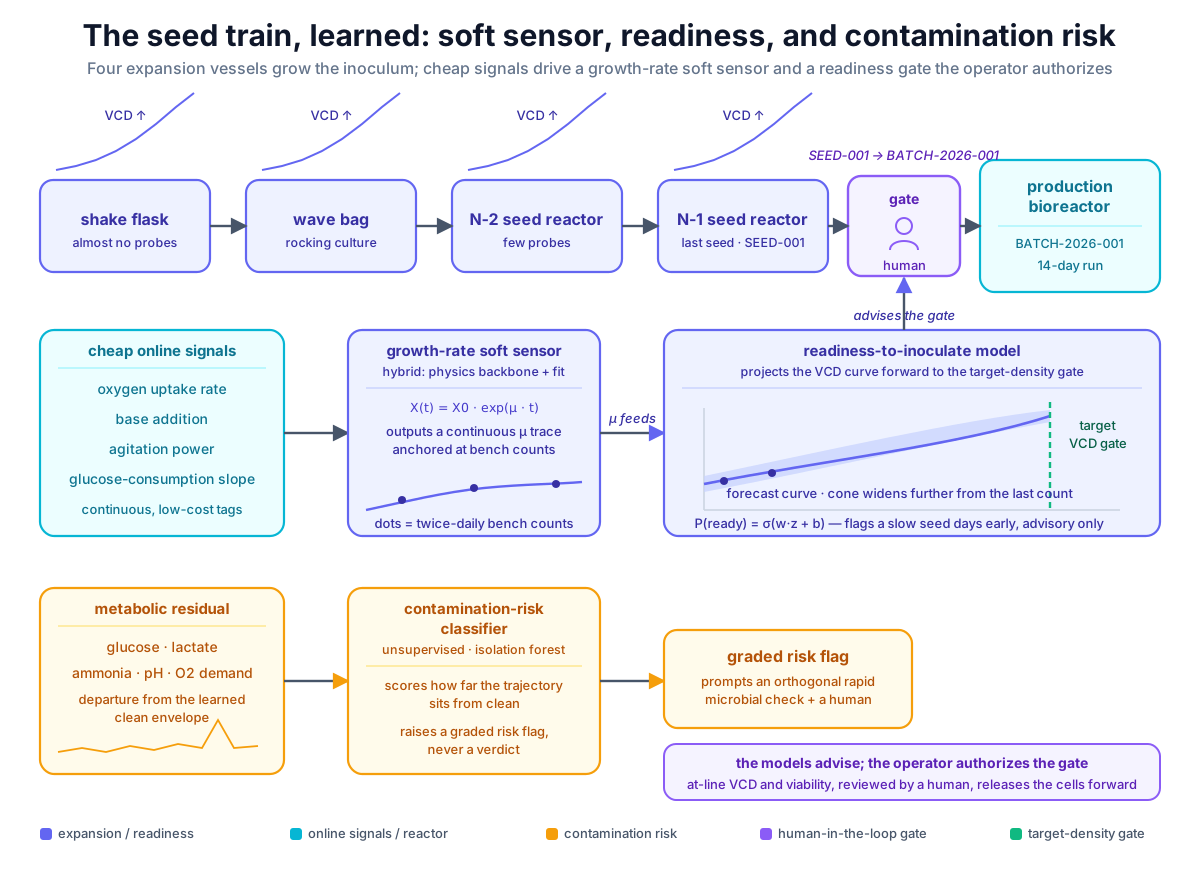 학습된 종균 배양: 값싼 온라인 신호가 성긴 벤치 계수에 닻을 내린 성장 속도 소프트 센서에 입력되고; 준비도 모델이 밀도 곡선을 넓어지는 불확실성과 함께 접종 게이트로 앞으로 투영하며; 오염 위험 분류기가 대사 잔차를 나란히 감시하고; SEED-001 → BATCH-2026-001 접종은 모델이 알려 주기만 하는 인간-승인 게이트로 남는다.
저자가 AI의 도움을 받아 직접 제작한 그림입니다.
학습된 종균 배양: 값싼 온라인 신호가 성긴 벤치 계수에 닻을 내린 성장 속도 소프트 센서에 입력되고; 준비도 모델이 밀도 곡선을 넓어지는 불확실성과 함께 접종 게이트로 앞으로 투영하며; 오염 위험 분류기가 대사 잔차를 나란히 감시하고; SEED-001 → BATCH-2026-001 접종은 모델이 알려 주기만 하는 인간-승인 게이트로 남는다.
저자가 AI의 도움을 받아 직접 제작한 그림입니다.
코드로 본 준비도와 성장 속도 모델
이 장의 실행 가능 산출물은 examples/platform/ml/seed_ready.py입니다. 그것은 300개 종균 배양의 합성 코호트 위에 접종 준비도 분류기를 만듭니다 — 합성이고, 그렇게 태깅되었는데, 진짜 종균 배양 라벨이야말로 공장이 몇 개밖에 갖지 못하는 바로 그것이기 때문입니다. 각 시뮬레이션된 종균은 공정 과학자가 3일차에 읽을 네 가지 특징을 지닙니다. 초기 비성장 속도 μ, 시간 단위 지체기, 생존율, 그리고 3일차 락트산. 라벨은 그 종균이 준비됨 — 빠른 성장, 짧은 지체, 건강함, 락트산 과잉 생산 없음 — 인지이며, 준비도 결과는 그 특징들 위의 로지스틱 관계로부터 생성되어 실험이 회복해야 할 알려진 신호를 갖도록 합니다. 우리는 이 규모의 문제를 위한 정전적(canonical) 오픈소스 파이썬 기계학습 라이브러리인 scikit-learn을 쓰고 [1], 코호트가 작고 관계가 단조에 가까우며 학습된 계수가 심사자가 필요로 하는 설명이기에 로지스틱 회귀를 씁니다:
# examples/platform/ml/seed_ready.py — inoculation-readiness classifier (synthetic cohort)
import numpy as np
from sklearn.linear_model import LogisticRegression
from sklearn.metrics import roc_auc_score
from sklearn.model_selection import train_test_split
from sklearn.preprocessing import StandardScaler

N = 300

def make_seeds(seed=2026):
    rng = np.random.default_rng(seed)
    mu = rng.normal(0.55, 0.10, N)                 # early specific growth rate (1/day)
    lag_h = rng.normal(18, 6, N).clip(2, 40)       # lag phase (h)
    viab = rng.normal(95, 3, N).clip(80, 99.5)     # viability %
    lactate = rng.normal(1.2, 0.5, N).clip(0.1, 3) # day-3 lactate g/L
    X = np.column_stack([mu, lag_h, viab, lactate])
    # ready = fast growth, short lag, healthy, not over-producing lactate
    logit = 6 * (mu - 0.5) - 0.08 * (lag_h - 18) + 0.15 * (viab - 92) - 1.2 * (lactate - 1.2)
    ready = (rng.random(N) < 1 / (1 + np.exp(-logit))).astype(int)
    return X, ready

def main() -> dict:
    X, ready = make_seeds()
    Xtr, Xte, ytr, yte = train_test_split(X, ready, test_size=0.35, random_state=0, stratify=ready)
    sc = StandardScaler().fit(Xtr)
    clf = LogisticRegression(max_iter=1000).fit(sc.transform(Xtr), ytr)
    auroc = roc_auc_score(yte, clf.predict_proba(sc.transform(Xte))[:, 1])
    print("Seed-train inoculation-readiness model (synthetic 300-seed cohort)")
    print(f"  readiness classifier AUROC = {auroc:.3f}")
    print(f"  ready fraction in cohort = {ready.mean():.2f}")
    assert auroc > 0.70, "readiness model should clear AUROC 0.70"
    return {"auroc": float(auroc)}
몇 가지 세부가 제자리를 얻습니다. 특징은 적합 전에 표준화(standardized)되어 — 각 특징이 평균 0, 단위 분산으로 다시 중심화됨 — 계수가 직접 비교 가능하고 정규화가 그것들을 같은 스케일에서 다룹니다. 서로 다르게 스케일된 네 개의 입력(여기서는 구성상 독립적이지만 실제 데이터에서는 상관될 수 있음)을 가진 종균 규모 모델은 정확히 스케일되지 않은 적합이 오도하는 곳입니다. 분할은 준비도 라벨에 대해 층화(stratified)되는데 — 양쪽 절반에 같은 준비됨/안 됨 비율을 유지하는 훈련/시험 분할(여기서는 채점을 위해 코호트의 35퍼센트를 보류함) — 코호트가 불균형하고(준비된 것이 안 된 것보다 많음) 층화되지 않은 분할은 시험 집합에 정직하게 채점하기엔 너무 적은 양성(positives)(준비된 배양물)을 건넬 수 있기 때문입니다. 그리고 지표는 정확도가 아니라 AUROC(수신자-조작-특성 곡선 아래 면적, area under the receiver-operating-characteristic curve)입니다. 준비도 플래그는 순위 결정(어느 종균이 게이트를 놓칠 위험이 가장 큰가)이며, AUROC는 임계값을 어디에 두든 무관하게 정확히 그 순위 품질을 측정합니다. 임계값 자체는 하류의 운영적 선택입니다 — 보수적으로 두면 엄밀히 필요한 것보다 많은 배양물을 조사하게 되고, 느슨하게 두면 느린 종균을 놓칩니다 — 그리고 그것은 놓친 느린 종균의 비용(지연되거나 덜 자란 배치)을 불필요한 조사의 비용에 견주어 조율되어야 합니다.
코드가 보여 주지는 않지만 다스려지는 배포가 필요로 하는 한 가지 규율은 입력에 대한 완전성 게이트이며, 그것은 Book 4가 로트 출하에 쓰는 바로 그 기제입니다. 불완전하거나 범위를 벗어난 특징 행에서 만든 준비도 예측은 예측이 없는 것보다 나쁩니다 — 빠진 3일차 락트산이나 120퍼센트의 생존율은 점수를 조용히 망칩니다. Book 4는 출하 결정을 SHACL 셰이프로 모델링하는데(셰이프 제약 언어, Shapes Constraint Language, 그래프 데이터가 필요한 구조를 갖는지 검증함), 빠진 필수 결과가 열린 질문이 아니라 지금 당장의 실패이기 때문에 정확히 그렇게 합니다. 같은 셰이프를, 출하 패널이 아니라 모델의 입력에 겨누면 올바른 사전-비행 점검이 됩니다. 네 특징 각각이 존재하고(sh:minCount 1), 단수이고(sh:maxCount 1), 올바른 데이터타입이며, 그럴듯한 범위 안에 있고(sh:minInclusive / sh:maxInclusive), 닻을 내리는 벤치 계수가 존재하고 최근일 것. SHACL은 historian, MES, LIMS 사이의 이음매를 — 떨어진 행이나 중복된 계수가 미끄러져 드는 바로 그곳을 — 지키므로, 모델은 데이터 시스템이 절반만 지어 둔 행을 결코 채점하지 않습니다. 출하 게이트의 완전성 보장이 훈련-및-추론 데이터-품질 보장이며, 재사용된 것입니다.
실행하면 RUN_OUTPUTS.txt에서 나온 실제 출력을 인쇄합니다:
### seed_ready.py ###
Seed-train inoculation-readiness model (synthetic 300-seed cohort)
  readiness classifier AUROC = 0.750
  ready fraction in cohort = 0.65
공정 엔지니어처럼 읽으세요. 300-종균 합성 코호트에서 준비도 분류기는 게이트를 통과할 가능성으로 종균의 순위를 AUROC 0.750에 매기는데 — 0.5가 동전 던지기이고 1.0이 완벽한 순위인 척도에서 — 이는 단언이 지키는 0.70 하한을 편안히 웃돌며, 코호트의 65%가 실제로 준비되어 있습니다. 그것은 의도적으로 영웅적인 숫자가 아닙니다. AUROC 0.75는 "유용한 분류 분류(triage)이지 신탁(oracle)은 아니다"입니다 — 그것은 가장 느리고 가장 건강하지 않은 배양물을 고정 달력 규칙보다 며칠 일찍 신뢰할 만하게 떠올려 줄 것이며, 그것이 운영상의 전부이지만, 접종을 승인하기에는 결코 충분히 빡빡하지 않습니다. 정직한 해석은, 초기 특징이 전체 궤적에 달린 게이트에 대해 진짜이지만 부분적인 정보를 나르며, 몇백 개의 합성 종균에서 훈련된 모델이 그 이상인 척해서는 안 된다는 것입니다. 단언 assert auroc > 0.70이 존재하는 것은 그 주장이 조용히 썩을 수 없도록 하기 위함입니다 — 미래의 변경이 종균 신호를 깨뜨리면, Book 3 소프트-센서 스크립트(Book 3 soft-sensor script)가 자기만의 R²를 지키는 것과 정확히 같이, CI가 요란하게 실패할 것입니다.
오염과 바이오버든 위험 예측
두 번째 시계가 위험한 것입니다. 완벽하게 자라지만 오염된 — 떠도는 박테리아, 곰팡이, 마이코플라스마(mycoplasma)(세포 배양물을 탐지되지 않은 채 오염시키기로 악명 높은 세포벽 없는 작은 박테리아) — 종균 배양은 종균뿐 아니라 그것이 접종하는 생산 배치까지 망칠 수 있으며, 표준 무균과 바이오버든 시험은 느립니다. 약전(compendial) 무균 시험(공식 약전 방법 USP / Ph. Eur.으로 수행되는 것)은 최대 14일까지 걸리기로 유명하며, 종균 단계가 지속되는 것보다 훨씬 깁니다. 그래서 배양 기반 시험이 오염을 확인할 무렵이면, 오염된 접종원이 이미 생산 탱크에 들어가 있을 수 있습니다. 학습 질문은 더 값싸고 빠른 신호가 오염의 이른 지문을 나르는지, 그래서 게이트를 붙잡을 시간에 위험을 표시할 수 있는지입니다.
두 가지 접근 부류가 있고, 그 뒤의 증거는 서로 다른 성숙도 등급에 자리합니다 — 이 책은 모든 주장에 두 가지 관습(two conventions)을 씁니다: 한 기법이 일상적 공장 사용으로 얼마나 나아갔는지를 말하는 성숙도 태그((연구) / (파일럿) / (상용))와, 그 뒤의 숫자가 얼마나 믿을 만한지를 말하는 증거 단계(보도자료만 → 벤더 자체 보고 → 자체 저자 동료심사 → 독립 동료심사):
- 대사-시그니처 이상 탐지(Metabolic-signature anomaly detection). 오염 생물은 CHO 세포와 다르게 대사합니다 — 글루코스 소비를 급증시키거나, 락트산이나 암모니아 궤적을 이동시키거나, 학습된 "깨끗한" 외피로부터 벗어나는 방식으로 pH와 산소 수요를 바꿀 수 있습니다. 올바른 도구는 비지도(unsupervised)입니다. 깨끗한 종균 배양에서만 훈련하고, 대사 궤적이 정상 구름을 떠나는 어떤 배양물이든 표시합니다. 고립 숲(isolation forest)은 특징 공간을 무작위로 분할하고 한 점을 고립시키는 데 몇 번의 분할이 드는지를 무작위 트리 앙상블에 걸쳐 평균하여 채점함으로써 이를 합니다 — 이상치는 더 적은 분할로 고립되어, 오염된 예시 없이도 이상 점수(단일 분할 횟수가 아니라 평균 경로 길이)를 줍니다. 일급 SVM(one-class SVM, 서포트 벡터 머신)은 대신 깨끗한 데이터를 에워싸는 경계를 학습하고 그 바깥의 거리를 채점합니다. 이것은 품질 대신 무균을 겨눈 다변량-감시(multivariate-monitoring) 발상이며, 같은 기계장치(배치-단계 이상에는 고립 숲, 제어 행동에는 무작위 숲)가 바로 Aizon이 바르셀로나 자치대학교와 함께 지속적 공정 검증을 위해 시연한 것입니다 — 다만 그 개념 증명은 포유류 CHO 종균 배양이 아니라 Pichia pastoris(효모) 모델 시스템에서 돌았으므로, (연구), 자체 저자 동료심사이며, 배포된 오염 탐지기로 과대 해석되어서는 안 됩니다 [2].
- 분광 식별(Spectroscopic identification). 라만(Raman)(산란된 레이저광으로부터 시료의 화학적 지문을 읽는 광학 프로브)과 UV-흡광 스펙트럼은 생물-특이적 지문을 나르며, 지도 분류기가 연구 환경에서 스펙트럼으로부터 미생물 오염을 식별하는 것이 보여졌습니다. 라만 기반 합성곱 신경망이 열두 가지 흔한 제약 오염 생물 — CHO 세포와의 혼합물 포함 — 을 95~100% 정확도로 분류했고 [3], 멸균 MSC 상청액에서 훈련된 기계학습-보조 UV-흡광 일급 SVM이 세포 치료 제품에서 일곱 균주에 걸쳐 대략 10 CFU/mL(밀리리터당 집락 형성 단위, colony-forming units per millilitre — 낮고 민감한 탐지 한계)에서 오염을 탐지했습니다 [4]. 둘 다 (연구) 시연 — 독립 동료심사 — 이며, 어느 쪽도 GMP-배포된 신속 무균 방법이 아닙니다. 약전 무균 시험을 대체하는 규제 잣대는 매우 높습니다.
한 가지 단서가 정직성을 날카롭게 합니다. 마이코플라스마는 대사 이상 탐지기가 가장 잡기 어려운 경우입니다. 빠르게 자라는 박테리아나 곰팡이와 달리, 마이코플라스마는 흔히 느리게 자라고, 뚜렷한 대사 시그니처를 거의 남기지 않으며, 배양물을 전혀 혼탁하게 만들지 않을 수도 있습니다 — 바로 그것이 생물-특이적 직교 시험(신속 PCR / 핵산 증폭)이 여전히 필수인 이유이고, 이상 점수가 결코 통과 허가가 아니라 오직 촉발일 수밖에 없는 이유입니다.
정직한 틀은 판결이 아니라 위험(risk, not verdict)입니다. 오염 위험 모델은 등급화된 이상 점수 — "이 배양물의 대사 궤적이 이상하다, 조사하라" — 를 만들어, 직교(orthogonal)(독립적이고 원리가 다른) 신속 미생물학적 방법(약전 표준 USP <1223> / Ph. Eur. 5.1.6 아래 검증된 RMM — ATP-생물발광, 성장 기반 신속 무균 방법, 또는 표적 PCR), 유세포 생존율 점검, 그리고 인간 결정을 촉발합니다. 그것은 무균 시험을 대체하거나 로트를 자율적으로 불합격시키지 않으며, 현재 규제 아래에서는 그럴 수 없습니다. 그리고 기저율(base rate)은 가혹합니다. 진짜 오염 사건은 드물어서, 지도식 "오염 탐지" 분류기는 학습할 양성 예시가 거의 없습니다 — 바로 그것이 비지도식 "깨끗함으로부터의 이탈" 틀이 더 정직한 이유이고, 점수가 독립 단독 판결이 결코 아니라 직교 시험을 위한 촉발인 이유입니다. 그 가치는 준비도 모델과 같습니다. 값싸게 산 통찰 — 오염된 접종원이 앞으로 움직이기 전에 게이트를 붙잡을 시간에.
준비도 예측 한 건의 해부
준비도 예측은 헐벗은 확률이 아닙니다. 이 시리즈의 모든 산출물처럼, 그 가치는 그 숫자와 함께 따라가는 것 안에 있습니다 — 그것을 만든 입력, 그 뒤의 모델과 데이터 버전, 그것을 둘러싼 불확실성, 그리고 결국 그것을 채점할 게이트 측정값. seed_ready.py가 SEED-001을 위해 영속화할 기록을, 필드 하나하나 해부하면, 그것은 소프트-센서 예측 기록(soft-sensor prediction record)의 종균 배양 유사물이자 MLOps 장(MLOps chapter)이 표류를 추적할 바로 그 다스려지는 객체입니다.
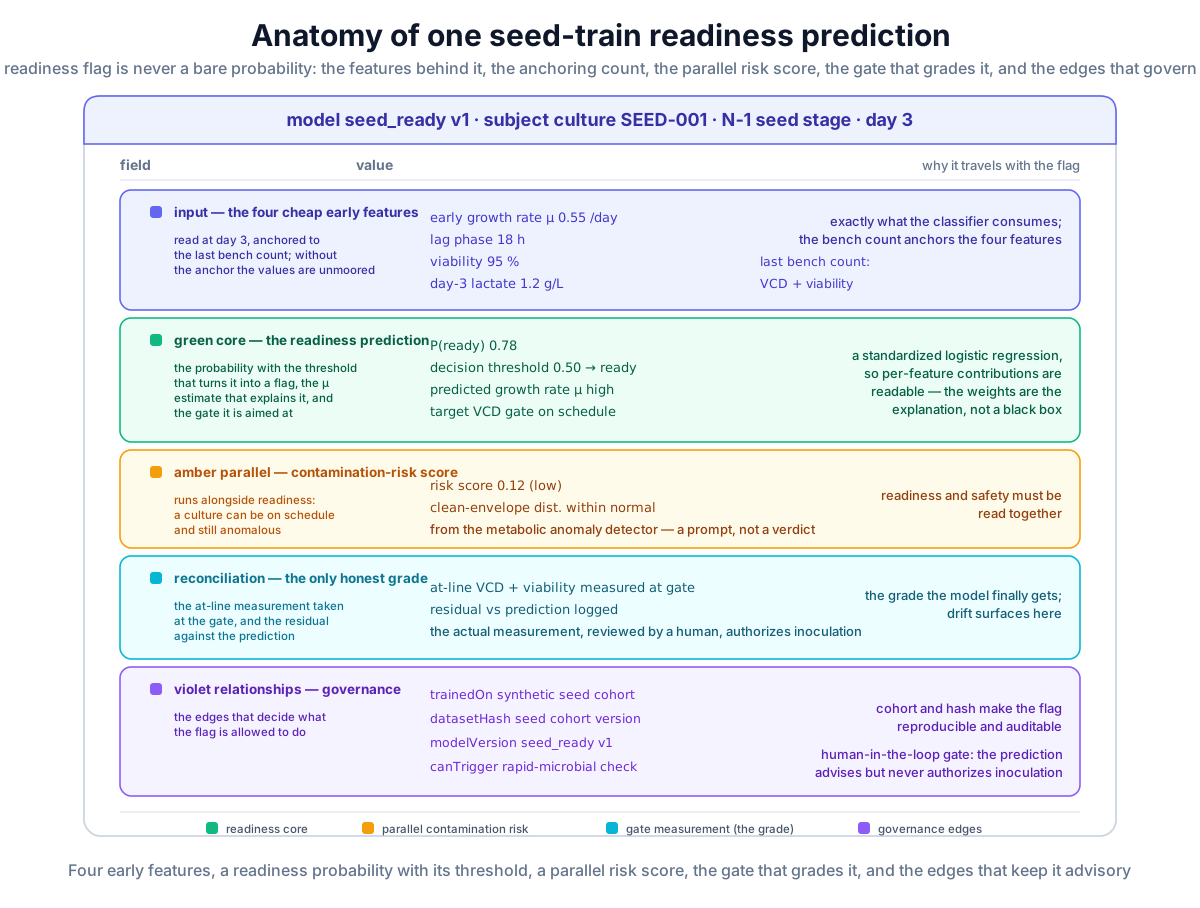 하나의 준비도 예측은 하나의 온전한 기록입니다: 초기 특징과 그것들의 닻을 내리는 벤치 계수, 임계값을 가진 준비도 확률과 성장 속도 추정값, 병렬 오염 위험 점수, 그것을 채점할 게이트 측정값, 그리고 그것을 다스릴 수 있게 만드는 관계들 — 예측이 조언하지만 결코 승인하지 않는 인간-개입 게이트를 포함하여.
저자가 AI의 도움을 받아 직접 제작한 그림입니다.
하나의 준비도 예측은 하나의 온전한 기록입니다: 초기 특징과 그것들의 닻을 내리는 벤치 계수, 임계값을 가진 준비도 확률과 성장 속도 추정값, 병렬 오염 위험 점수, 그것을 채점할 게이트 측정값, 그리고 그것을 다스릴 수 있게 만드는 관계들 — 예측이 조언하지만 결코 승인하지 않는 인간-개입 게이트를 포함하여.
저자가 AI의 도움을 받아 직접 제작한 그림입니다.
카드를 위에서 아래로 읽으면 이 장의 논증이 필드로 펼쳐집니다. 입력 행은 분류기가 실제로 소비하는 네 가지 값싸고 이른 특징입니다 — μ, 지체, 생존율, 3일차 락트산 — 더하기 그것들을 닻 내리는 VCD와 생존율의 마지막 벤치 계수. 그 닻 없이는 특징 값이 정박하지 못합니다. 녹색 핵심은 예측 본체입니다. 그것을 플래그로 바꾸는 작동 임계값과 짝지어진 준비도 확률(그래서 독자가 이 배양물이 선에 얼마나 가까운지 볼 수 있음), 확률이 어디에 떨어졌는지를 왜 그러한지 설명하는 성장 속도 추정값, 그리고 예보가 겨눈 표적 VCD 게이트. 모델이 표준화된 로지스틱 회귀이므로, 카드는 특징별 기여 — 부호 있는 가중치 곱하기 표준화된 값 — 를 나를 수 있어, 심사자가 가령 긴 지체가 블랙박스 선언이 아니라 "준비 안 됨" 플래그를 구동했음을 보게 됩니다.
호박색 병렬 블록은 나란히 도는 오염 위험 점수인데, 준비도와 안전이 함께 읽혀야 하기 때문입니다 — 배양물은 일정에 완벽하게 맞으면서도 여전히 이상할 수 있습니다. 화해 행은 게이트 측정값(운전자가 접종에서 실제로 측정하는 인라인 VCD와 생존율)과 예측 대비 잔차, 즉 모델이 받는 유일한 정직한 점수를 담습니다. 그리고 보라색 관계 패널은 거버넌스를 기록합니다. 그것이 훈련한 종균 코호트, 데이터셋 해시, 모델 버전, 위험 점수가 촉발할 수 있는 신속-미생물 점검, 그리고 — 가장 중요한 필드 — 예측이 조언하지만 승인하지 않는 인간-개입 접종 게이트.
N-1 관류 강화 결정
지난 십 년에서 가장 중대한 종균 배양 결정은 N-1 관류 강화(N-1 perfusion intensification)입니다. 마지막 종균 단계를 배치가 아니라 관류(perfusion) 배양으로 운전하여 — 용기를 한 번 채우고 끝에 수확하는 대신, 신선한 배지를 계속 흘려 넣고 소모된 배지를 흘려 내보내면서 세포를 방혈(bleed)(밀도가 폭주하지 않도록 일부를 빼냄)하여 — 매우 높은 밀도에 이르게 함으로써, 생산 리액터가 관습적 세포 밀도의 다섯에서 열 배로 접종될 수 있게 하는 것입니다. 고밀도 접종원은 생산 성장 단계를 단축하고 부피 생산성(volumetric productivity)(리액터 리터당 하루에 만들어지는 제품)을 실질적으로 끌어올릴 수 있습니다 — 그것은 공정 강화의 진짜 역마 중 하나입니다. 페드-배치 핵심(model_fedbatch.py, DAYS = 14)이 우리가 실제로 가진 시뮬레이션 데이터이며, 강화된 관류 경로는 모음 안의 관류 모듈로 뒷받침되기보다 여기서 정성적으로 기술됩니다.
그 결정은 진정으로 다차원적이며, 이것이 그것을 어림 규칙이 아니라 모델링 표적으로 만드는 것입니다. 레버는 세포-비관류 속도(cell-specific perfusion rate, CSPR) — 세포당 하루당 전달되는 신선한 배지 — 와 고밀도 정상 상태를 유지하는 방혈 속도입니다. 두 레버는 노동을 나눕니다. 방혈 속도는 정상 상태 밀도를 설정하고 — 방혈 더하기 관류의 희석에 맞서 균형 잡힌 성장 — CSPR은 각 세포가 하루에 보는 신선한 배지의 양을 설정하여, 영양소 충족과 단계의 지배적 비용 양쪽을 다스립니다. 너무 낮은 CSPR은 빽빽한 배양물을 굶기고 생존율을 무너뜨리며, 너무 높은 CSPR은 아무 이득 없이 배지(관류 단계의 지배적 비용)를 태웁니다. 목적은 표적 고밀도 접종원에, 일정에 맞게, 가장 낮은 배지 비용으로, 생산 운전으로 전파되는 대사 부산물을 끌어올리지 않으면서 도달하는 것입니다. 그것은 몇 주간 돌아가는 운전에 대한 제약된 최적화이며, 느리고 비싼 피드백 루프와 함께입니다 — 정확히 ML을 부르는 형태이고, 정확히 ML의 역할이 조심스럽게 진술되어야 하는 형태입니다.
ML은 어디에 맞을까요? 그것은 결정과 운전을 알려 주지만, 그것을 만들지는 않습니다:
- 결정에 알려 주기. 강화할지 그리고 어떻게 강화할지는 공정-개발 질문 — 그리고 그것은 고밀도 접종원이 생산 운전으로 어떻게 전파될지를 예측하는 베이지안 최적화(Bayesian optimization)와 하이브리드 디지털 트윈(hybrid digital twins)의 본거지입니다. 관류-공정 하이브리드 모델 — 생존 세포 밀도와 기타 상태를 예측하는 기계론적 핵심이 mAb-비생산성을 예측하는 얕은 신경망에 입력되는 — 은 후보 CSPR/공급 정책 아래 세포-밀도 궤적과 역가에 대한 하류 효과를 예측하여, 강화된 종균을 자격검증하는 데 필요한 실험을 줄일 수 있습니다 [5].
- 단계 운전하기. 관류 종균 리액터는 거의 정상 상태에서 몇 주간 돌아가는데, 이는 배치별 준비도 질문을 연속적인 것으로 바꿉니다 — CSPR과 방혈이 띠 안에 유지되어야 하고, 밀도를 추적하는 소프트 센서와 정상 상태를 감시하는 표류 모니터가 배치별이 아니라 일상의 운영 도구가 됩니다. 여기서 가장 진보된 시연은 DataHow가 Sartorius 및 Merck와 함께 한 것입니다. 24-병렬 ambr250 미니-바이오리액터 플랫폼에서 베이지안 최적 실험 설계와 단계별 가우시안-과정 모델의 인지적 디지털 트윈으로 구동되는 자율 관류 배양입니다. 그것은 PD 규모에서 무엇이 가능한지를 보여 주지만 — 27일 개념 증명에 대략 20일을 자율 에이전트가 운전했습니다 — 저자들 자신이 로봇 능력과 장치 자율성 사이의 간극을 강조합니다. 그것은 (연구), 동료심사, 개발-규모 개념 증명이며, 명시적으로 GMP가 아닙니다 [6]. DataHow는 이 협업에서 Sartorius 자회사가 아니라 독립 회사임에 유의하세요.
- 그리고 이 분야가 이름 붙일 만큼 자주 틀리는 정정: 널리 인용되는 National Resilience의 "+50% 역가" 관류 이야기는 PAT-플러스-수동-공급-최적화 결과입니다 — PAT(공정분석기술, process analytical technology)는 인라인 측정으로, 여기서는 ML이 아니라 수동 공급을 안내하는 데 쓰였습니다 — 벤더 보도자료에서 보고되었고, Resilience는 908 Devices의 REBEL 인라인 배지 분석기를 써서 고갈된 영양소만 도로 채웠습니다 — ML 배포가 아니며, 결코 기계학습이 역가를 끌어올린 증거로 제시되어서는 안 됩니다 [7]. 강화 이득은 실재합니다. 그것을 ML 덕으로 돌리는 것이 아닐 뿐입니다.
미해결 과제: 닻이 거의 존재하지 않을 때 소프트 센서를 닻 내리기
이 책의 모든 소프트 센서는 자신을 정직하게 유지하기 위해 느린 참조에 기댑니다. 종균 배양은 그 의존을 파탄 지점까지 밀어붙입니다. 생산 바이오리액터(production bioreactor)에서 오프라인 참조는 하루에 한두 번 도착합니다. 진탕-플라스크 종균 단계에서는 잘해야 하루 한 번 도착할 수 있고, 초기 N-2 단계는 앞으로 넘어가기 전에 단 한 번의 계수만 가질 수도 있습니다. 한두 점에 닻 내린 성장 속도 소프트 센서는 거의 내내 외삽하고 있으며, 몇 개의 역사적 종균 배양 위에 세워진 준비도 모델 — 우리의 300-종균 코호트조차 합성인 것은 정확히 진짜 공장이 300개의 라벨 붙은 배양 같은 것을 전혀 갖지 못하기 때문입니다 — 은 상류가 결코 요구하지 않는 콜드스타트 체제(cold-start regime)로의 가장 깊은 도달입니다.
이것이 두 가지 실패를 진정으로 어렵게 만듭니다. 첫째는 조용한 성장 속도 표류(silent growth-rate drift)입니다. 드문 계수 사이에서, μ를 과대 측정하기 시작한 소프트 센서(프로브 이동, 새 배지 로트, 해동 후 평소보다 긴 지체 때문에)는 옳은 것과 똑같아 보이고, 그것이 입력하는 준비도 예보는 확신에 차서 틀립니다. 그것을 잡을 두 번째 참조가 간극에 없으며, 그것이 의존하는 값싼 온라인 신호는 오차와 함께 표류할 수 있습니다 — 오염된 DO 프로브는 OUR 대리물과 μ 추정값을 같은 방향으로 편향시켜, 소프트 센서 자신의 입력이 표류를 숨기려 공모합니다. 그 편향이 공통 모드(common-mode)이기 때문에, 표류 모니터는 자신이 감시해야 할 바로 그 채널을 읽어서는 안 됩니다. 그것은 의심되는 결함에 직교하는 대리물 위에 세워져야 합니다 — OUR에서 유도한 μ를 염기-첨가와 글루코스-기울기 추정값에 교차 점검하거나, 모델 혁신(innovation) 검정을 쓰는 것 — 같은 오염된 입력을 읽는 모니터는 그것이 공유하는 표류에 눈이 멀기 때문입니다. 둘째는 오염 기저율 문제(contamination base-rate problem)로, 우리가 앞서 만났고 종균 배양이 우발적이 아니라 구조적으로 만드는 것입니다. 진짜 오염이 드물기 때문에, 아무리 많은 추가 종균 배양 역사도 지도 분류기에게 그것이 결여한 양성 예시를 건네주지 못합니다 — 비지도 "깨끗함으로부터의 이탈" 틀은 빈약한 데이터에 대한 임시방편이 아니라 그 문제의 영구적 형태이며, 그 플래그조차 직교 시험을 위한 촉발로 남습니다.
이 책의 나머지가 기대는 전이학습과 베이지안-사전(prior) 접근이 가장 유망한 길입니다 — 학습된 개체-임베딩(entity-embedding) 벡터를 가진 하이브리드 가우시안-과정 모델은 관련 세포주와 이전 캠페인에서 학습된 성장과 대사 사전을 빌려 이 세포주의 빈약한 역사를 보완할 수 있습니다 [8] — 그러나 그 어느 것도 종균 배양이 구조적으로 제공할 수 없는 참조 데이터를 대신하지는 못합니다. 사전은 빈약한 사후(posterior)를 날카롭게 합니다. 그것은 단계가 결코 돌리지 않을 한두 개의 계수를 제조하지 못합니다. 정직한 종균 배양 소프트 센서는 자신이 얼마나 모르는지를 아는 것입니다. 넓은 구간, 존재하는 어떤 계수든 거기에 단단히 닻 내림, 자기 입력에 대한 표류 모니터, 그리고 모든 중대한 결정을 게이트의 인간에게 미룸.
이 장이 모델 모음에 더하는 것
이 장은 Book 5 예제 모음에 examples/platform/ml/seed_ready.py를 기여합니다. 합성 300-종균 코호트 위에 scikit-learn으로 만든 접종 준비도 분류기로, 준비도 신호가 예측력을 유지한다는 CI 단언(AUROC 0.70 이상)과 함께입니다. 그것은 Book 3의 soft_sensor.py(Book 3's soft_sensor.py)의 상류 대응물입니다 — 같은 규율(태깅된-합성 데이터셋, 층화된 보류 분할, 지켜진 지표), 역가가 아니라 준비도를 겨눈 것. 여기 스케치된 성장 속도 소프트 센서와 오염 위험 분류기는 모음의 나머지가 온전히 펼쳐 놓는 기계장치를 공유합니다 — 하이브리드-모델 장(hybrid-models chapter)의 하이브리드 골격과 QC와 방출 장(QC and release chapter)에 쓰인 이상 탐지 — 그래서 이 장은 두 번째 중복 탐지기가 아니라 종균-단계 틀과 특징을 기여합니다. 함께 그들은 종균 배양을 세포주 개발과 바이오리액터 사이의 간극이 아니라 모델 모음이 실제로 돌릴 수 있는 노드로 만듭니다.
왜 중요한가
종균 배양은 가장 비싼 실패를 막을 가장 값싼 장소입니다. 성장 속도 소프트 센서와 준비도 플래그는 종균 단계를 고정된 기다림에서 관리되는 일정으로 바꿉니다 — 배양물이 질주할 때 생산 스위트를 하루 일찍 예약하거나, 덜 자란 채 접종하는 대신 개입할 시간에 맞춰 느린 배양물을 잡는 것. 무균 결과보다 이틀 앞선 오염 위험 플래그는 종균 플라스크를 폐기하는 것과 BATCH-2026-001을 폐기하는 것 사이의 차이입니다. 그리고 하이브리드 트윈으로 N-1 강화 결정을 모델링하는 것은 공장이 한 캠페인의 운전이 아니라 한 줌의 운전으로 고밀도 접종원을 자격검증하는 방식입니다. 종균 배양을 제대로 잡으면 생산 바이오리액터는 건강하고, 일정에 맞고, 무균-확신된 접종원을 물려받습니다. 그것을 건너뛰면 — 척추가 흔히 그러듯 — 하류에서 가장 데이터가 풍부한 단계가 상류에서 가장 덜 감시된 단계 위에 세워집니다.
실제 현장에서는
종균 배양 ML은 실재하지만 이르며, 상류 ML의 나머지가 모이는 곳에 모입니다. 자율 제어가 아니라 감시와 소프트 센싱. 종균과 생산 용기에서의 성장 속도와 대사물질 소프트 센싱은 생산 탱크를 감시하는 같은 라만-플러스-PLS와 다변량 플랫폼(Sartorius SIMCA / SIMCA-online, BioPAT)을 통한 (상용) 관행입니다 — 여기서 PLS(부분 최소제곱, partial least squares)는 라만 스펙트럼을 농도 판독값으로 바꾸는 회귀입니다. N-1 관류 강화는 업계 전반에서 (상용) 공정 기술이지만, 그것을 둘러싼 ML — 그것을 설계하는 하이브리드 트윈, 그것을 운전하는 소프트 센서 — 은 (파일럿)에서 (연구)입니다. DataHow/Sartorius/Merck 자율-관류 작업은 개발-규모 개념 증명으로, 동료심사를 거쳤지만 명시적으로 GMP가 아닙니다 [6]. 오염 예측은 가장 덜 성숙합니다. 라만과 UV 심층학습 오염 식별은 (연구) 시연이고 [3][4], 공정 감시를 위한 대사 이상 탐지는 (상용) 기법(고립 숲, 무작위 숲)이지만 신속 무균 방법으로 자격검증되지는 않았습니다. 일관된 줄기는 FDA의 2023년 논의 문서(FDA's 2023 discussion paper)와 ISPE Pharma 4.0 설문(ISPE Pharma 4.0 survey)이 거듭 찾아내는 것입니다. 공장의 이 부분에서 AI/ML은 파일럿이 가장 많고 규모화된 배포가 가장 적으며, 핵심 품질 특성(critical quality attribute, CQA) — 제품을 안전하고 유효하게 유지하기 위해 범위 안에 있어야 하는 순도나 역가 같은 속성 — 에 대한 자율 결정이 아니라 인간-개입 감시에 농축되어 있습니다 [9]. 학습된 종균 배양은 모델이 게이트를 붙잡음으로써가 아니라 게이트에 조언함으로써 신뢰를 얻는 장소입니다.
핵심 용어
- 종균 배양(Seed train) — 작업 세포 은행에서 생산 바이오리액터를 접종하는 데 필요한 밀도까지 세포를 키우는 확장 단계의 사슬(바이알 → 플라스크 → N-2 → N-1).
- N-1 / N 단계(N-1 / N stage) — 생산 단계(N)에서 거꾸로 세는 번호 관습; N-1은 그것을 접종하는 마지막 종균 단계.
- 비성장 속도(Specific growth rate, μ) — 세포 분열의 순간 속도; 시간에 대한 로그 생존-세포-밀도의 기울기로, 영양소(Monod)와 부산물-억제 항으로 조절됨.
- 소프트 센서(Soft sensor) — 측정할 수 있는 값싼 신호로부터 실시간으로 측정할 수 없는 양(여기서는 μ나 준비도)을 추정하는 모델로, 느린 오프라인 참조에 대해 검증됨.
- 성장 속도 소프트 센서(Growth-rate soft sensor) — 값싼 온라인 신호(OUR, 염기 첨가, 교반 동력)로부터 μ를 연속적으로 추정하는 소프트 센서로, 성긴 오프라인 계수에 닻을 내림.
- 접종 준비도(Readiness-to-inoculate) — 종균 배양물이 일정에 맞게 표적-밀도 게이트를 통과할지를 표시하는 분류기로, 접종 일정을 잡는 데 쓰임; 그것은 게이트를 조언하지만 승인하지 않음.
- AUROC — 수신자-조작-특성 곡선 아래 면적; 모델이 결정 임계값과 무관하게 양성을 음성보다 얼마나 잘 순위매기는지를 측정함.
- N-1 관류 강화(N-1 perfusion intensification) — 마지막 종균 단계를 관류 배양으로 운전하여 고밀도에 이르게 함으로써, 생산 리액터가 훨씬 높은 세포 밀도로 접종되게 하는 것.
- CSPR(세포-비관류 속도)(CSPR (cell-specific perfusion rate)) — 세포당 신선-배지 관류 속도, 관류 종균 단계의 핵심 제어 변수.
- 오염 / 바이오버든 위험 예측(Contamination / bioburden risk prediction) — 느린 무균 시험보다 일찍 오염의 대사적 또는 분광적 지문을 표시하는 것, 직교 점검을 촉발하는 등급화된 위험으로서.
- 대사-시그니처 이상 탐지(Metabolic-signature anomaly detection) — 대사물질 궤적이 학습된 깨끗한 외피를 떠나는 배양물을 비지도로 표시함(고립 숲, 일급 SVM).
- 인간-개입 게이트(Human-in-the-loop gate) — 모델이 접종 결정에 조언하는 한편, 인간이 실제 인라인 측정값을 써서 그것을 승인한다는 원칙.
- CQA(핵심 품질 특성)(CQA (critical quality attribute)) — 약물을 안전하고 유효하게 유지하기 위해 범위 안에 있어야 하는 제품 속성(순도나 역가 같은); 자율 모델이 넘어야 할, 그리고 아직 넘지 못한 규제 잣대.
derivedFrom계보(derivedFromlineage) — 모든 로트를 그 세포 은행에 뿌리내리는 전이적 "made-from" 간선(BATCH-2026-001 → SEED-001 → … → WCB-CHO-001); 여기서는 한-종균-배양-제외 교차검증의 그룹화 키를 겸하여 AUROC가 누설로 부풀려지지 않게 함.- 시맨틱 상호운용성(Semantic interoperability) — historian, MES, LIMS가 한 물리적 신호를 다르게 명명한 기록들이 같은 것을 뜻하게 만드는 작업으로, 종균 배양 특징이 깨지기 쉬운 열 이름이 아니라 (ISA-95 / 통제 어휘를 통해) 의미 위에서 결합되도록 함.
- SHACL 입력 게이트(SHACL input gate) — 로트 출하를 게이트하는 바로 그 닫힌-세계 완전성 셰이프를 모델의 입력 행에 겨누어, 빠지거나 중복되거나 범위를 벗어난 특징이 예측을 망치기 전에 거절하는 것.
- Continuant / occurrent (BFO) — 종균 운전을 happening으로, 벤치 계수를 한 순간에 측정된 품질로 타입화하는 상위-온톨로지 구분으로, 측정값을 그것이 채취된 운전과 구별되게 유지함.
다음 이야기
종균 배양은 건강하고, 일정에 맞고, 무균-확신된 접종원을 SEED-001 → BATCH-2026-001 게이트를 거쳐 앞으로 넘겨줍니다. 다음 장 생산 바이오리액터: 소프트 센서, 폐루프 제어, 그리고 디지털 트윈(The Production Bioreactor: Soft Sensors, Closed-Loop Control, and the Digital Twin)은 우리가 종균 규모에서 스케치한 소프트 센싱이 상류에서 가장 성숙한 ML이 되는 곳입니다 — 라만-플러스-PLS 역가와 대사물질 예측, 폐루프 글루코스 제어, 그리고 상류 전체가 향해 온 14일 운전의 하이브리드 디지털 트윈.